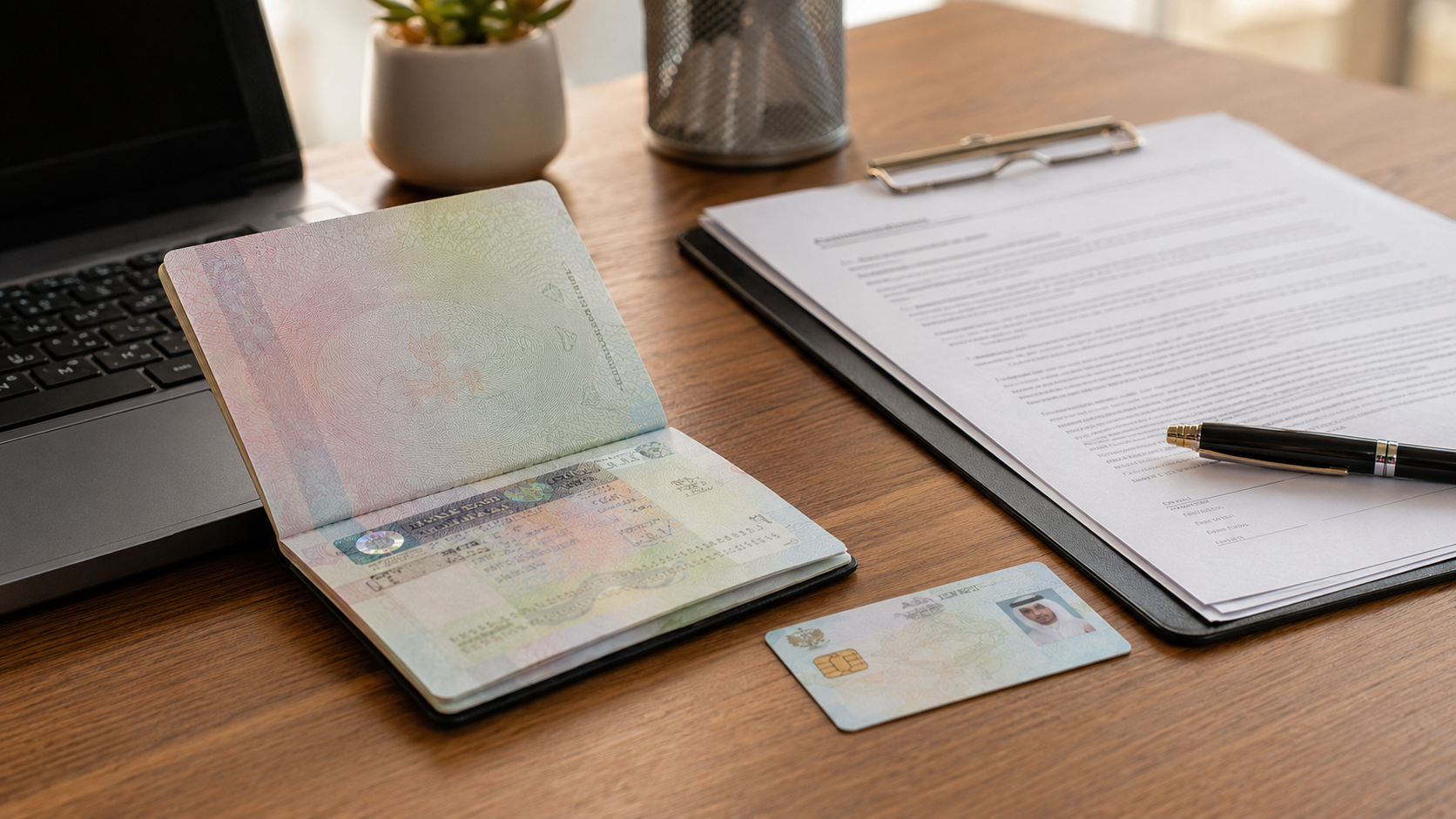
UAE Employment Visa Cost and Processing Time 2026
One of the first things people ask when they get a job offer from a UAE company is: how much is this going to cost, and how long will it take? Those are reasonable questions — but the honest answer is more nuanced than a single number. Understanding the UAE employment visa cost and processing time 2026 requires knowing who pays for what, which steps have fixed government fees and which vary by employer, and what the realistic timeline looks like from start to finish. This guide breaks all of that down clearly so you know exactly what to expect before you go through the process.
Who Actually Pays for the UAE Employment Visa?
Before getting into numbers, this is the most important point to be clear on: under UAE Labour Law, the employer is legally responsible for bearing the cost of the employment visa for any worker they sponsor. The entry permit, medical fitness test, Emirates ID, and residence visa stamping are all employer costs — not worker costs.
That said, some employers — particularly for professional and management roles — include a clause in the employment contract allowing them to recover visa costs from salary deductions over a period of time. This is legal in the UAE if it is explicitly stated in the MOHRE-registered employment contract before you sign it. If it is not in your contract, you cannot be asked to pay.
For blue-collar, entry-level, and operational roles, the employer almost always absorbs the full cost with no deduction from the worker. This is standard practice across construction, logistics, hospitality, security, and retail sectors.
The clearest warning sign: if anyone — a recruiter, agent, or supposed employer — asks you to pay for your own UAE employment visa before you arrive, or charges you upfront fees to process your visa, that is either a scam or an illegal practice. Do not pay. Walk away.
UAE Employment Visa Cost and Processing Time 2026 — The Complete Fee Breakdown
The UAE employment visa cost and processing time can be understood by looking at each component of the process separately. There is no single “visa fee” — the total cost is made up of several distinct government charges, each covering a specific step.
1. Employment Entry Permit
This is the first government fee in the process. Before you can enter the UAE for residency purposes, your employer must apply for and receive an employment entry permit on your behalf. This permit is issued by the General Directorate of Residency and Foreigners Affairs (GDRFA) in Dubai, or by the Federal Authority for Identity, Citizenship, Customs and Port Security (ICA) for other emirates.
Typical cost: AED 200 to AED 500, depending on the category and emirate.
Paid by: Employer
Processing time: 3 to 10 working days after submission of all required documents
2. Medical Fitness Test
After arriving in the UAE on your entry permit, you are required to pass a medical fitness test at an approved health centre. The test screens for specific communicable diseases and is a mandatory step before your residence visa can be issued. Results are submitted directly to the immigration system — you do not need to handle the report manually.
Typical cost: AED 300 to AED 500
Paid by: Employer in most cases
Processing time: Results in 1 to 3 working days
3. Emirates ID
The Emirates ID is your official identification card while living in the UAE. Every resident — regardless of nationality or employment type — must have one. It is linked to your biometric data and residence visa and is required for banking, tenancy agreements, and most government services.
Emirates ID fees are set by ICA and are fixed based on the validity period of your residence visa:
- 2-year Emirates ID: AED 370
- 3-year Emirates ID: AED 470
- 5-year Emirates ID (for Green or Golden Visa holders): AED 570 to AED 770
Paid by: Employer (standard employment visa); employee for Green/Golden Visa
Processing time: 5 to 15 working days after biometrics submission
4. Residence Visa Stamping
Once the medical test is cleared and biometrics are submitted, your employer applies for your UAE residence visa. This is the visa that gets stamped into your passport and officially establishes your legal residency in the UAE. It is linked to your employer and is typically valid for two or three years.
Typical cost: AED 200 to AED 600, depending on the visa category and emirate
Paid by: Employer
Processing time: 3 to 7 working days after medical clearance and biometrics
5. Typing and Service Centre Fees
Applications for entry permits, Emirates IDs, and residence visas must be submitted through ICA-approved typing centres or through the employer’s registered PRO (public relations officer). These service centres charge administrative fees for form preparation and submission.
Typical cost: AED 100 to AED 200 total
Paid by: Employer
Total UAE Employment Visa Cost 2026 — Summary
| Visa Component | Approximate Cost (AED) | Who Pays |
|---|---|---|
| Employment Entry Permit | AED 200 – 500 | Employer |
| Medical Fitness Test | AED 300 – 500 | Employer |
| Emirates ID (2-year) | AED 370 | Employer |
| Emirates ID (3-year) | AED 470 | Employer |
| Residence Visa Stamping | AED 200 – 600 | Employer |
| Typing and Service Fees | AED 100 – 200 | Employer |
| Estimated Total | AED 1,170 – 2,270 | Employer |
These figures represent typical government-rate costs for a standard two-year mainland employment visa in Dubai or Abu Dhabi in 2026. Free zone visas may have slightly different fee structures administered by the respective free zone authority. Fees are subject to periodic revision by the government — always verify against the latest ICA or GDRFA official schedules.
UAE Employment Visa Processing Time 2026 — Realistic Timeline
Processing time for the UAE employment visa is one of the most frequently misunderstood aspects of the process. People often think it takes much longer — or much shorter — than it actually does. Here is a realistic breakdown by stage.
Stage 1: Entry Permit Approval
Time: 3 to 10 working days from employer application submission.
This is the first gate. The employer submits the entry permit application with your documents — passport copy, photographs, employment contract details. GDRFA or ICA processes it on their end. Once approved, your employer receives the entry permit and sends it to you so you can travel.
Delays at this stage usually happen when documents are incomplete, when the employer’s quota is restricted, or during high-volume periods like the beginning of January or after Eid holidays. Make sure your employer has your correct passport information and all required documents before they apply — one wrong detail forces a resubmission.
Stage 2: Travel to UAE on Entry Permit
Time: Up to 60 days from entry permit issue date
Once the entry permit is issued, you typically have 60 days to enter the UAE. Do not leave this too long. Entry permits are not renewable in the same way a tourist visa is — if yours expires, your employer has to apply for a new one, which restarts the timeline and incurs additional fees.
Stage 3: Medical Fitness Test
Time: Test completed same day; results in 1 to 3 working days
Your employer or PRO will direct you to an approved medical centre. The test itself — blood test and chest X-ray — takes an hour or two. Results go directly into the UAE government system. If cleared, the process moves forward automatically. If there is any issue with the results, your employer will be notified and the situation needs to be managed through the appropriate channels before the visa can proceed.
Stage 4: Emirates ID Biometrics
Time: Appointment at typing centre or ICA service centre — usually within 1 to 3 days of scheduling
Your employer’s PRO submits the Emirates ID application and schedules your biometrics appointment. You attend in person to provide fingerprints and a facial scan. This is a brief visit — usually 20 to 30 minutes. The ICA app or website allows you to track your Emirates ID status after submission.
Stage 5: Residence Visa Stamping
Time: 3 to 7 working days after medical clearance and biometrics
Your employer applies for the residence visa stamp after both the medical clearance and biometrics are completed. The visa is stamped into your passport — either at a GDRFA centre or via an approved typing centre depending on the emirate. Some employers use an expedited service for this step, which can reduce the time to 1 to 2 working days for an additional fee.
Stage 6: Emirates ID Collection
Time: 5 to 15 working days after biometrics
Your Emirates ID is processed separately from the visa stamp. It is either couriered to a registered address (many employers use a company address) or made available for collection at an ICA service centre. You can track it through the ICA smart services app. Until your ID arrives, a copy of your Emirates ID application receipt serves as a temporary reference document for most purposes.
Total UAE Employment Visa Processing Time 2026 — Summary
| Stage | Typical Time |
|---|---|
| Entry permit approval | 3 – 10 working days |
| Medical fitness test results | 1 – 3 working days |
| Biometrics appointment | 1 – 3 working days |
| Residence visa stamp | 3 – 7 working days |
| Emirates ID delivery | 5 – 15 working days |
| Total from arrival to full completion | 3 – 5 weeks typically |
From the time you land in Dubai to the day you have both your residence visa stamp and Emirates ID in hand, three to five weeks is the realistic expectation for most standard employment visa cases in 2026. Factors that extend this include missing documents, medical clearance delays, or peak processing periods at government centres.
Free Zone vs Mainland Employment Visa — Cost and Time Differences
If your employer is a free zone company rather than a mainland UAE entity, the visa process works slightly differently. Free zone employment visas are administered by the free zone authority itself — JAFZA, DMCC, DAFZA, DIFC, and others — rather than directly through MOHRE and GDRFA.
In practice, the steps are broadly the same — entry permit, medical test, biometrics, residence visa, Emirates ID — but the fees are set by the free zone authority rather than by government standard rates. Some free zones have slightly higher administrative fees; others have package deals for batch employee visas that are more cost-effective per person.
Processing times at free zones are generally similar to mainland, though some larger free zones have dedicated immigration counters that can move faster for their licensees. If your employer is a free zone company, ask their HR team directly about the timeline and fee structure for your specific free zone.
Visa Renewal Cost and Processing Time
Employment visas in the UAE are typically valid for two or three years. Before expiry, your employer needs to renew your residence visa if your employment is continuing. The renewal process involves largely the same steps — a medical fitness test, Emirates ID renewal, and visa stamping — and the costs are similar to the initial visa.
It is the employer’s responsibility to initiate renewal before the visa expires. If a visa lapses — even by a day — overstay fines begin accumulating at AED 50 to AED 200 per day depending on the visa type. Both the employer and the employee have an interest in keeping track of the expiry date. The ICA smart services app and the GDRFA Dubai app both allow you to check your visa expiry date and set reminders.
For an in-depth look at how the full UAE work visa process works from entry permit to Emirates ID — including what happens at each stage and what to expect on arrival — our guide on the UAE Work Visa Process 2026 covers every step in plain language.
What the Visa Does NOT Cover — Practical Costs to Be Aware Of
The UAE employment visa covers your legal right to live and work in the country. It does not cover everything that comes with arriving. Here are some costs that workers sometimes do not anticipate:
Document Attestation (if required)
For roles requiring verified educational qualifications — healthcare, engineering, education, legal — your certificates may need to be attested by your home country’s relevant ministry and then by the UAE Embassy in your country before they are accepted. Attestation costs vary widely by country and certification level, but can range from a few hundred to over a thousand dollars depending on the complexity and how many documents require attestation. This is the employee’s responsibility in most cases and is worth budgeting for before you travel.
Flight to Dubai
Many blue-collar and operational roles include an annual return flight as part of the employment package. However, the initial flight to Dubai on joining is not always covered — check your offer letter carefully. Some companies reimburse it on arrival; others do not cover it at all. Clarify this before accepting any offer.
Bank Account Opening
You cannot open a UAE bank account until you have your Emirates ID. This is a practical reality that affects when you can start managing your finances properly in the UAE. Most banks process new account applications within a few days once you have the ID, but plan for a gap of a few weeks after arrival before full banking access is in place.
Common Mistakes That Delay UAE Employment Visa Processing
Most delays in the UAE employment visa cost and processing time are caused by the same avoidable errors. Here are the ones that come up most often.
Submitting Incorrect or Unclear Passport Copies
The entry permit application requires a clear, complete passport copy. Blurry scans, cropped pages, or copies with missing data pages are the most common cause of first-step rejections. Send your employer a clean, high-resolution scan of your full passport data page — not a phone photo taken in bad lighting.
Delaying Travel After the Entry Permit Is Issued
Entry permits are valid for a fixed period — typically 60 days from the date of issue. Some people delay their travel for personal or logistical reasons without realising the permit has expired. If your entry permit expires, your employer must apply again from scratch, which adds two or more weeks and additional cost. Once the permit is issued, get your travel booked promptly.
Not Informing the Employer of Pre-existing Health Conditions
The medical fitness test screens for specific communicable diseases. If you have a relevant health condition that might affect the outcome, the time to discuss it with your employer is before you travel — not after you fail the test in Dubai. Most reputable employers can advise on the process and options. Surprising the system on arrival rarely ends well.
Not Getting Documents Attested in Time
For roles requiring certificate attestation, the process can take several weeks or more depending on your home country. If you wait until after receiving a job offer to start attestation, you can hold up the entire visa timeline. Start the attestation process early — ideally before you even apply, or at the same time as your application.
If you are also evaluating which types of Dubai jobs typically come with full visa sponsorship included in the package, our guide on How to Find Dubai Visa Sponsorship Jobs in 2026 covers the sectors and roles where sponsored packages are standard, along with how to apply safely without paying any fees.
Frequently Asked Questions
What is the total cost of a UAE employment visa in 2026?
The total UAE employment visa cost for a standard two-year mainland residence visa typically ranges from AED 1,170 to AED 2,270 in government and service fees, covering the entry permit, medical fitness test, Emirates ID, residence visa stamping, and typing centre charges. This cost is legally the employer’s responsibility. Workers should not be charged for their own UAE employment visa under any legitimate employment arrangement.
How long does the UAE employment visa take to process in 2026?
The UAE employment visa processing time from arrival in the UAE to having both the residence visa stamp and Emirates ID in hand is typically three to five weeks. The entry permit stage alone takes three to ten working days before you can travel. The total process from initial employer application to full completion — including travel — is usually six to twelve weeks for internationally hired workers.
Can the employer deduct visa costs from my salary?
Only if this is explicitly stated in your MOHRE-registered employment contract before you sign it. If salary deductions for visa costs are not in your contract, your employer cannot legally make them. For blue-collar and operational roles, this deduction is rarely applied. For professional and management roles, some employers do include a visa cost recovery clause — always read your contract carefully before signing.
What happens if my UAE employment visa expires?
If your residence visa expires while you are still in the UAE, overstay fines begin immediately at AED 50 to AED 200 per day depending on your visa type. If you are outside the UAE when it expires, you will be unable to re-enter without a new visa being issued. Both situations create complications. Track your expiry date using the ICA smart services app and make sure your employer initiates renewal well in advance — at least 30 days before expiry is recommended.
Is the UAE employment visa processing time different for free zone employees?
The stages are broadly the same but are administered by the free zone authority rather than GDRFA or ICA directly. Processing times at most free zones are comparable to mainland — three to five weeks from arrival to full completion. Fees may differ from standard government rates and are set by each free zone. Ask your employer’s HR team for the specific timeline for your free zone.
Can I verify official UAE visa fees independently?
Yes. The Federal Authority for Identity, Citizenship, Customs and Port Security (ICA) publishes official fee schedules for Emirates ID and residence visa services on their website. For Dubai specifically, GDRFA Dubai also maintains current fee information. Checking official sources is the best way to verify whether what you are being charged matches the actual government rates.
What documents do I need to submit for my UAE employment visa?
The standard documents required for a UAE employment visa include a clear passport copy with at least six months of remaining validity, passport-sized photographs, a signed employment contract registered through MOHRE, and educational certificates if your role requires qualification verification. Your employer’s PRO handles the submission of most of these — your job is to ensure the copies you provide are complete, clear, and correct.
Final Thoughts
Getting clear on the UAE employment visa cost and processing time 2026 before you start the process removes a significant amount of anxiety from what is already a big life move. The costs are structured and predictable. The timeline, while it requires patience, follows a logical sequence that rarely surprises people who know what to expect.
The most important things to hold onto: the employer pays, you do not. The entry permit has an expiry so do not dawdle after it is issued. The full process from arrival takes three to five weeks under normal conditions. And if anything about the fee structure you are being quoted feels off — check the official ICA website and the MOHRE website to verify against published government rates.
Go in knowing the numbers and the timeline. It makes the whole experience considerably less stressful.